Farmland Deer Impacts and Assessment Project
Over the last three years, FWAG SE has been working with Natural England on their Sussex Woods Protected Sites Strategy Pilot (SWPSSP). This umbrella project incorporates several elements, seeking to address the issue of an expanded and expanding deer population in the Southeast of England. In the SWPSSP area, roe, muntjac and fallow are all present, but it is the rapidly expanding fallow population that is the main concern and focus of the work.
FWAG SE has been working specifically on identifying deer activity and impact indicators across crops and agri-environmental options. This can include grazing, browsing, flattening of the crops from deer passing through and lying up in fields, and leaving pellets, which then have to be cleaned out of the harvested crop.
In the first year, FWAG SE carried out basic surveys across five farms in the SWPSSP project area, recording signs of deer presence and any impacts that local populations are having upon different combinable crops, winter cover crops, permanent grassland, hedges, and a range of Countryside Stewardship options, including grass margins, bird seed plots, and pollen and nectar mixes. The aim was to identify some of the common indicators in a farmland context and determine the frequency of these across our trial farms.
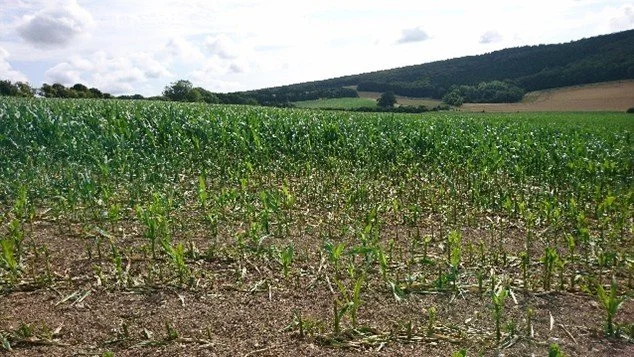
Grazing in maize
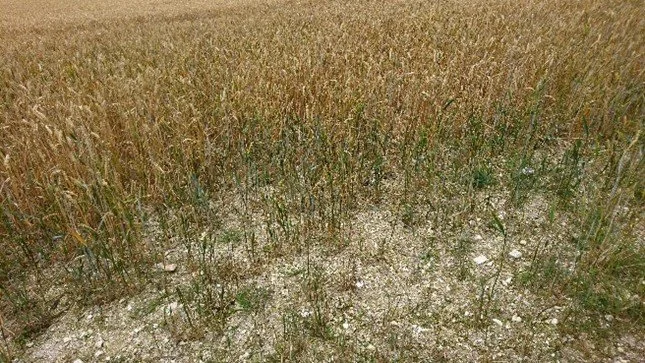
Grazing and pellets in wheat
.
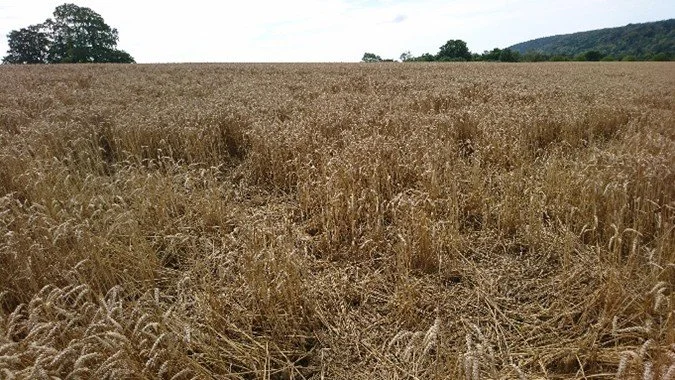
Trampling in wheat
In the second year, we used our findings from year one to develop a specific survey methodology, based on the existing Deer Impact Assessment for woodland. We then trialled this on another five farms to ensure that this methodology had good validity and could be easily replicated by farmers and other advisors. The results of the assessment can be used when producing deer management plans, submitting licence applications or to help manage deer across a cluster group or protected landscape. Exclosure plots were also erected in some of these crops and options and monitored at several points throughout the growing season, to establish whether they could be easily deployed, and whether they would provide any useful supplementary data when impacts might only be visible at a species level or when contrasted with a control.
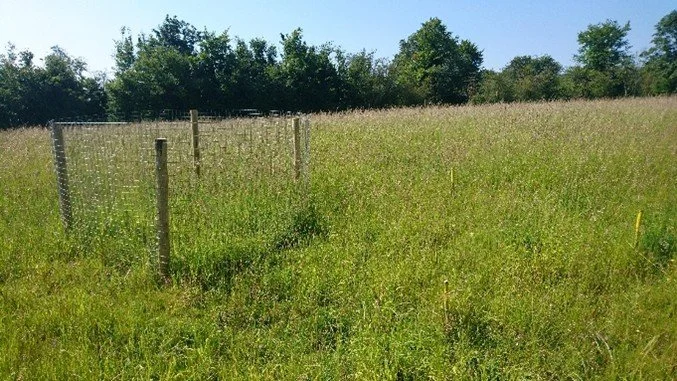
Exclosure plots in a flower-rich plot
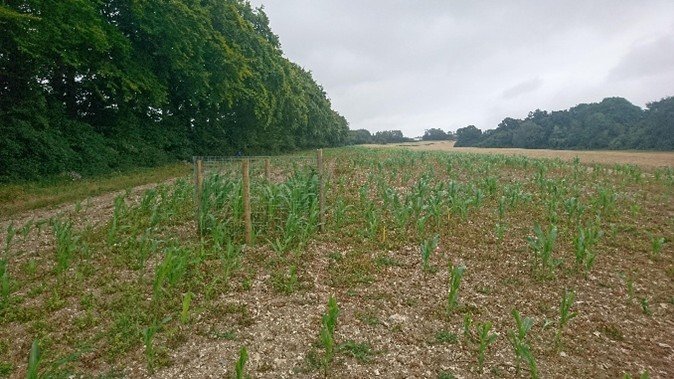
Exclosure plot in a game cover strip
Last year, as an extension of this work, we were asked to look specifically at the financial costs for land managers of either losing crops, or preventing or mitigating against deer impacts. Interviews were carried out with seven land managers, covering arable and livestock farming and other rural enterprises. The aim was to identify areas of land where significant impacts had been recorded and then to collect specific evidence of costs incurred as a result. These could relate to crop losses, costs of infrastructure or equipment, or the expense of the deer management itself. We produced a booklet for partners and land managers, outlining the key impacts, costs and signposting to sources of guidance and support.
A draft cover for the advisory booklet for land managers